Introduction
Aesthetic medicine is rapidly growing as one of the most sought-after fields in healthcare and wellness. With increasing demand for non-surgical cosmetic procedures, professionals entering this domain must go beyond theoretical knowledge. While textbooks and lectures lay the foundation, true expertise is built through hands-on training.
Practical learning plays a crucial role in developing confidence, precision, and real-world problem-solving skills—qualities essential for success in aesthetic medicine.
Why Theory Alone is Not Enough
Understanding concepts is important, but aesthetic procedures require accuracy, technique, and experience. Relying only on theory can leave practitioners underprepared when dealing with real clients.
Key limitations of theory-only learning:
- Lack of real-time decision-making experience
- Limited exposure to different skin types and conditions
- No opportunity to correct mistakes under expert supervision
- Reduced confidence in performing procedures independently
Without hands-on exposure, transitioning from learning to practice can be challenging.
The Importance of Hands-On Training
- Builds Practical Confidence
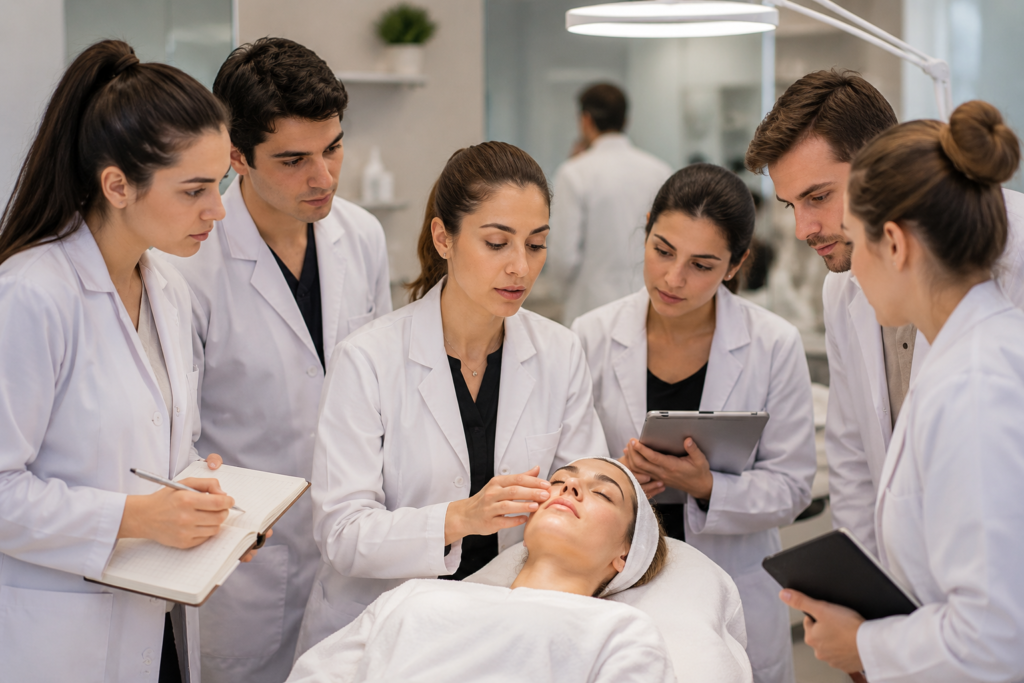
Hands-on training allows learners to work on real cases under expert guidance. This boosts confidence and prepares them to handle clients effectively from day one.
- Enhances Technical Skills
Aesthetic procedures demand precision. Practical sessions help learners master techniques, understand tools, and develop control that cannot be achieved through theory alone.
- Real Patient Interaction
Working with real individuals helps practitioners understand:
- Different skin types
- Unique concerns and expectations
- Consultation and communication skills
This experience is essential for delivering personalized treatments.
- Immediate Feedback and Correction
Hands-on training provides instant feedback from experienced mentors. This helps learners:
- Identify mistakes early
- Improve techniques quickly
- Avoid common beginner errors
- Exposure to Advanced Equipment
Modern aesthetic medicine involves the use of advanced devices and technologies. Practical training ensures familiarity with equipment, safety protocols, and proper usage.
Bridging the Gap Between Learning and Practice
Hands-on training acts as a bridge between classroom learning and real-world application. It transforms theoretical knowledge into actionable skills.
Professionals trained with practical exposure are more likely to:
- Deliver better results
- Build trust with clients
- Grow their practice faster
- Stay competitive in the industry
Career Advantages of Practical Training
Choosing a training program that emphasizes hands-on experience can significantly impact career growth.
Benefits include:
- Faster skill development
- Increased job opportunities
- Ability to start independent practice
- Higher client satisfaction and retention
In today’s competitive aesthetic industry, practical expertise is not just an advantage—it is a necessity.
Conclusion
In aesthetic medicine, success is defined by skill, confidence, and real-world experience. While theoretical knowledge provides the foundation, hands-on training shapes a competent and confident practitioner.
If you are looking to build a strong career in this field, choosing a program that prioritizes practical learning can make all the difference.
For professional training and guidance, you can connect at:
Address:
1st Floor, Ragvilas Society
Lane D, Opp. Devnagari Building
Near Bhavani Super Market
Koregaon Park, Pune – 411001
Maharashtra, India
Phone: 9284753707
Email: [email protected]
Taking the first step toward hands-on learning can open doors to a successful and rewarding future in aesthetic medicine.
Recent Posts
-
 Feeling Professionally Stuck After a Career Break in a Healthcare Industry That Changes Faster Every Year
 -
 Why More Women Doctors Are Choosing Faster-Growing Career Paths Beyond Conventional Medical Practice
 -
 Struggling to Balance Career Growth, Personal Responsibilities, and Financial Independence in Traditional Medical Careers
 -
 Feeling Unprepared to Handle Real Clinical Cases After Completing Medical Courses Focused Mostly on Theory
 -
 How Skill-Based Learning Is Becoming More Valuable Than Degrees Alone in the Modern Healthcare Industry